






SELF EMPLOYED MORTGAGE
Self-Employed? You May Have More Mortgage Options Than You Think.
Being self-employed gives you flexibility and control over your career—but qualifying for a mortgage can sometimes be more complicated than it is for a traditional salaried employee.
If you’re a business owner, sole proprietor, incorporated professional, contractor, consultant, freelancer, partner, or commission-based professional, lenders may assess your income differently.
The good news is that being self-employed does not automatically prevent you from qualifying for a mortgage.
The right mortgage solution depends on your income, business history, credit, down payment, debts and the property you’re purchasing.
I help self-employed borrowers across Ontario understand their mortgage options and prepare their applications for lender review.
Built for Self-Employed Professionals
If you’re self-employed, getting a mortgage shouldn’t be complicated. We offer common sense lending solutions that look beyond payslips.
For All Professions
We work with all types of self-employed professionals and businesses.
Income Reviewed Differently
We assess your income using your business financials and tax returns.
Flexible Lending Criteria
Our lending criteria is flexible and designed to suit your needs.
Competitive Interest Rates
Enjoy great rates and terms on your self-employed mortgage
Can I Get a Mortgage If I'm Self-Employed?
Yes. Self-employed Canadians can qualify for mortgages through banks, credit unions and other lenders, depending on their financial circumstances.
CMHC’s Self-Employed mortgage insurance program provides financing options for eligible self-employed borrowers, including sole proprietors, partnerships and incorporated businesses.
CMHC generally recommends 24 months of business operation or experience in the same line of work, although certain recently self-employed borrowers may qualify when other strengths are present, such as predictable income, previous industry experience, cash reserves, training or the purchase of an established business.
The key is understanding how a lender will calculate and verify your income.
Why Can Self-Employed Income Be More Complicated?
Business owners often claim legitimate business expenses and deductions that reduce their taxable income.
For example, your business may generate strong revenue, while the income reported on your personal tax return is considerably lower.
Some mortgage programs allow eligible business expenses to be added back or income to be adjusted when calculating qualifying income, subject to the lender or insurer’s requirements.
That’s why your mortgage application should be based on your complete financial picture, rather than looking at one number on your tax return.
Who Can Qualify?
Self-employed mortgage solutions may be available to a wide range of business professionals. Whether you own a business, work as a contractor, consultant or freelancer, lenders may consider your income and overall financial profile when assessing your mortgage application.
- Business owners
- Sole proprietors
- Incorporated business owners
- Partnership owners
- Contractors
- Consultants
- Freelancers
- Entrepreneurs
How Is Self-Employed Income Verified?
- T1 General tax returns
- Notices of Assessment (NOAs)
- T2125 Statement of Business or Professional Activities
- Business financial statements
- GST/HST returns
- Business bank statements
- Business registration or incorporation documents
- Proof of income
- Proof of down payment
Self-Employed Mortgage Basics
Understanding Self-Employed Mortgage Requirements
Being self-employed doesn’t automatically make getting a mortgage more difficult. However, lenders may assess your income, business history, credit profile, down payment and financial documentation differently than they would for a traditional employee. Understanding these requirements can help you prepare your application and choose a mortgage solution that fits your circumstances.

Recently Self-Employed?
You may not need to wait two years to qualify. Recent self-employed borrowers may still be eligible based on factors such as industry experience, stable income, savings, training, business history and credit profile.
Incorporated Business Owners
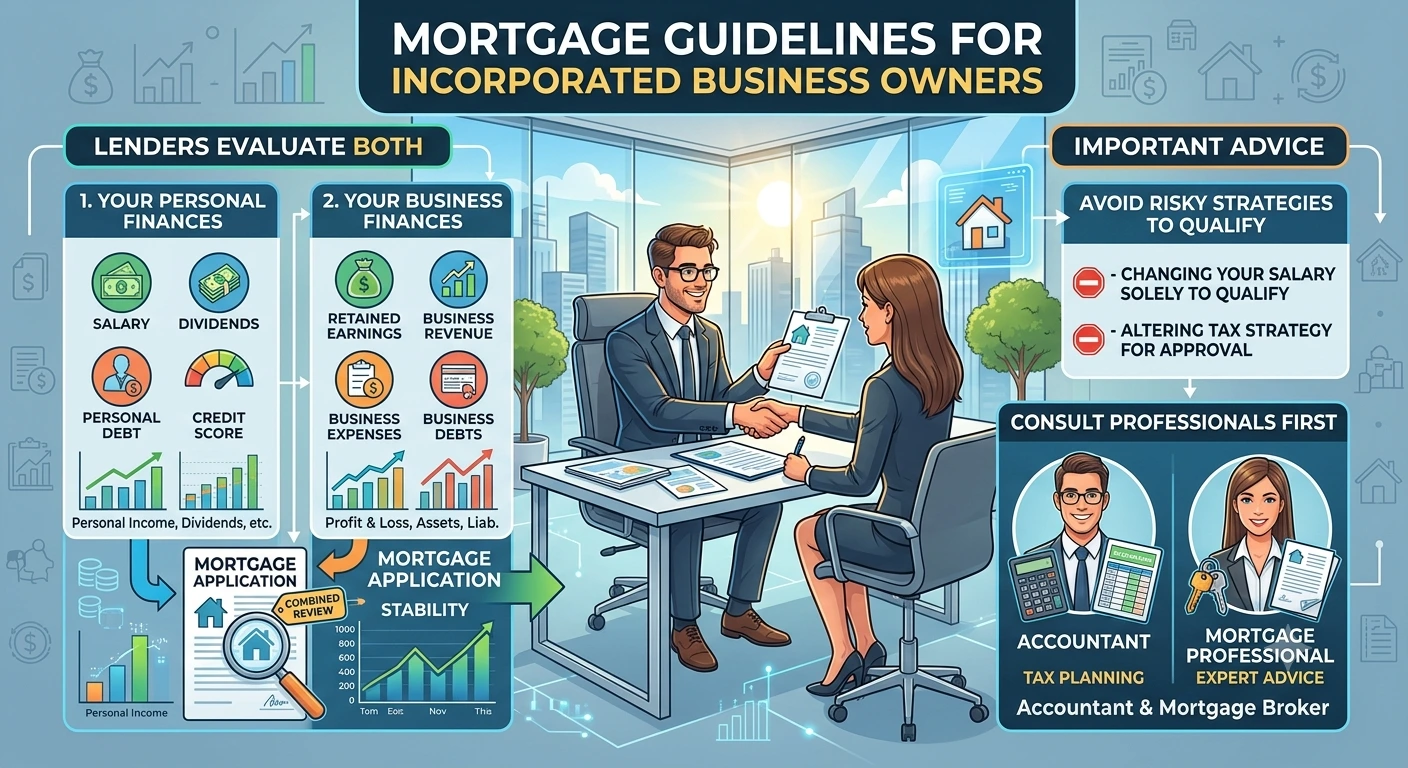
If you operate through a corporation, lenders may consider both your personal and business finances, including income, dividends, retained earnings, expenses, debts and business stability. Avoid changing your salary or tax strategy solely to qualify without first consulting your accountant and mortgage professional.
What Credit Score Do I Need?
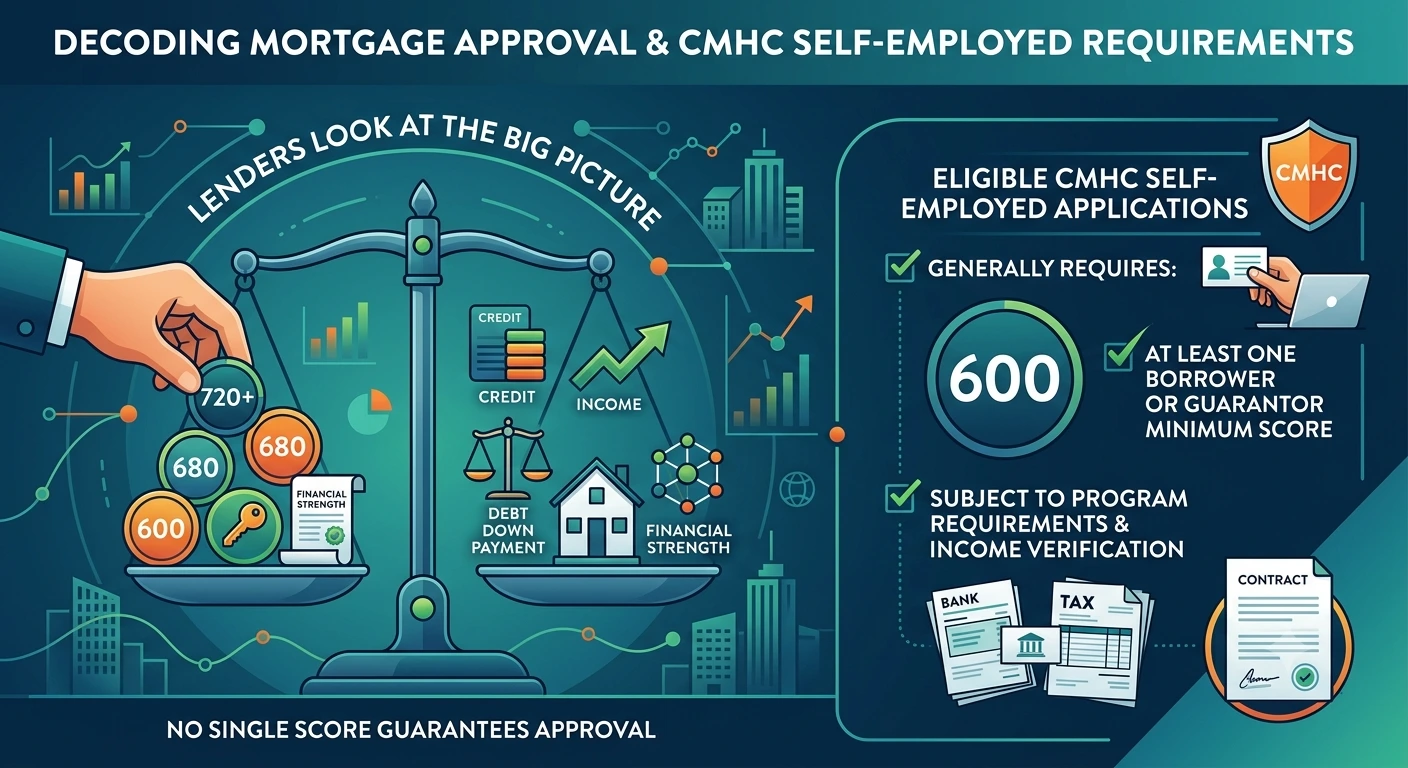
There is no single credit score that guarantees approval. Lenders may consider your credit, income, debts, down payment and overall financial strength. For eligible CMHC Self-Employed applications, at least one borrower or guarantor generally needs a minimum credit score of 600, subject to program requirements.
How Much Down Payment Do I Need?
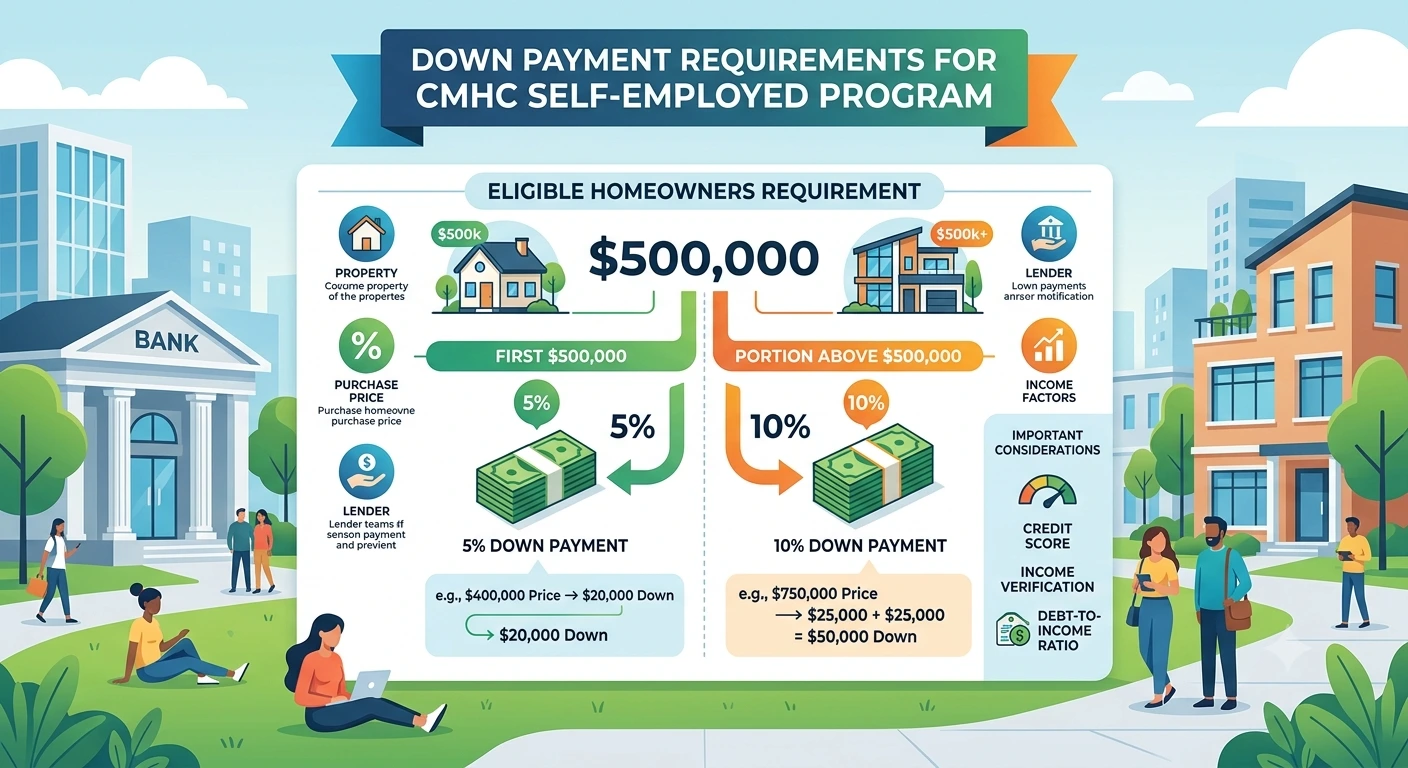
Your down payment depends on the property, purchase price and lender. Under CMHC’s Self-Employed program, eligible homeowners may require:
• 5% of the first $500,000
• 10% of the portion above $500,000
What About the Mortgage Stress Test?
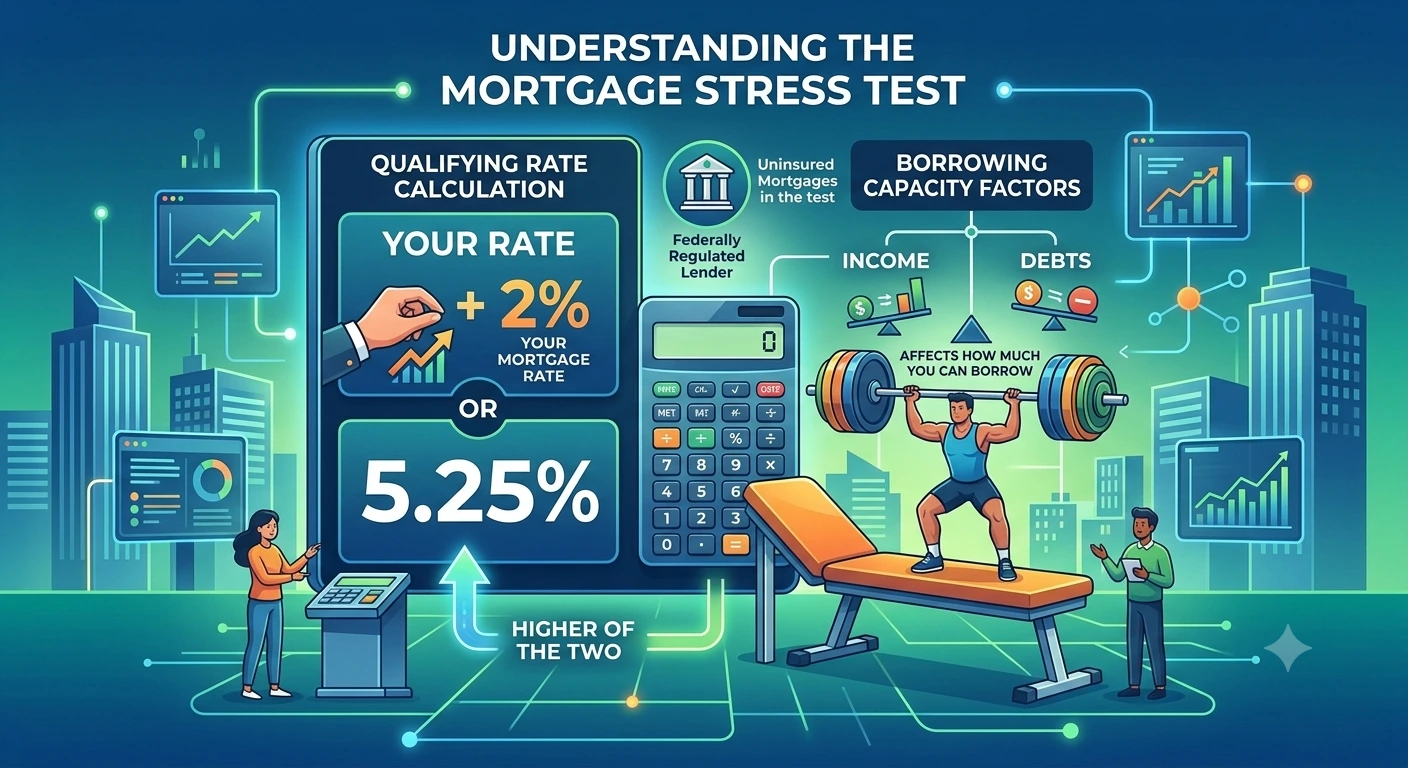
Federally regulated lenders generally apply a mortgage stress test to uninsured mortgages. You typically qualify at the higher of your mortgage rate plus 2% or 5.25%, with your income and debts affecting how much you can borrow.
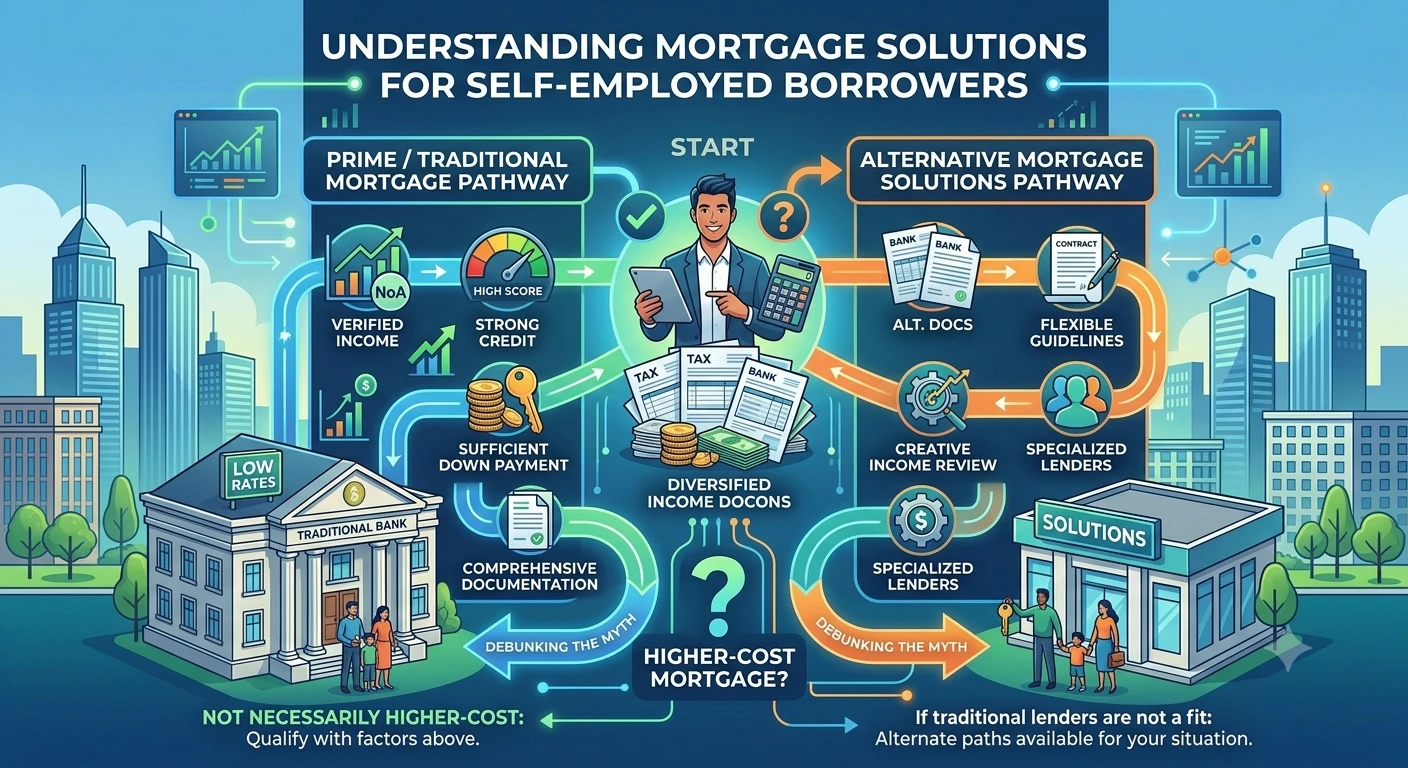
Do Self-Employed Borrowers Have to Use a Higher-Cost Mortgage?
Not necessarily. Depending on your income, credit, down payment and documentation, you may qualify with a traditional or prime lender. If not, alternative mortgage solutions may be available to fit your financial situation.

Why Work With a Mortgage Agent?
Different lenders can have different policies for assessing self-employed income.
A mortgage agent can help you:
- Review your income and business structure
- Determine what documentation may be required
- Estimate your potential borrowing capacity
- Compare mortgage solutions
- Identify potential qualification issues early
- Prepare your application for lender review
Mortgage Guidance You Can Trust
Why Choose Our Mortgage Advisors?
Get expert guidance and tailored mortgage solutions designed around your financial goals. With trusted advice, flexible options and a strong track record of client satisfaction, we help make the mortgage process simpler and more confident.
Expert Mortgage Advisors
Tailored Mortgage Solutions
Trusted by Thousands of Clients
Rated Excellent on Reviews
Self-Employed Mortgage FAQs
Possibly. Some mortgage programs may consider recently self-employed borrowers when other factors support the application.
Possibly. Certain lenders and mortgage programs use different methods to assess self-employed income, including permitted add-backs or income adjustments.
Yes. Your personal and corporate financial information may both be considered when assessing your application.
Start with your recent NOAs, T1 returns, proof of income and business documentation. Additional documents may be required depending on your situation and lender
Yes, potentially. Qualification, down payment and rental-income requirements can differ from those for an owner-occupied property.
Let's Review Your Self-Employed Mortgage Options
Don’t let the way you earn your income stop you from exploring your mortgage options.
Whether you’re an entrepreneur, business owner, incorporated professional, contractor, consultant or freelancer, I can help you understand how lenders may view your income and what financing options may be available.